


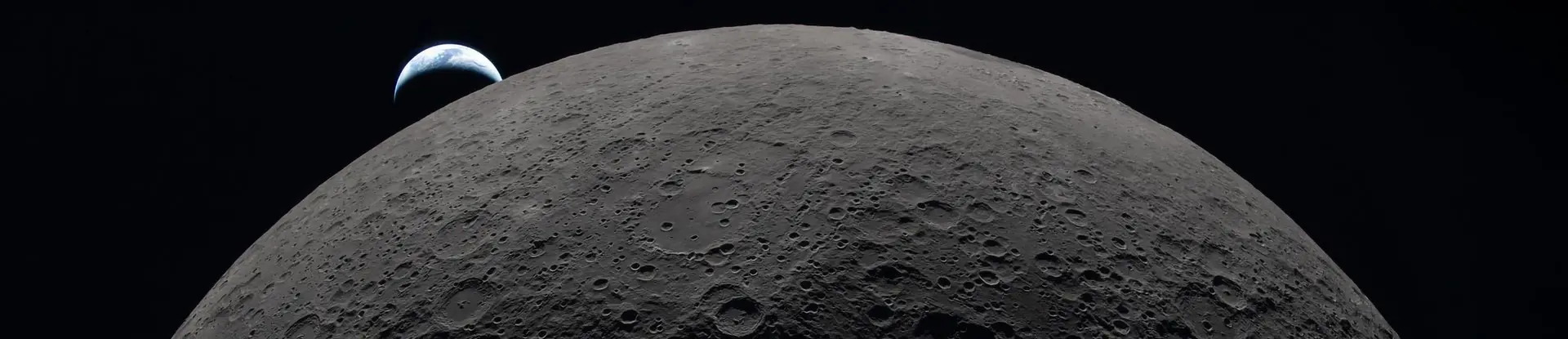
Heliophysics investigates the Sun, how it interacts with the Earth and the space weather it creates. It is critical to consider the Sun’s activity when planning Moon exploration. As lunar landing plans unfold, SwRI scientists are contributing research and expertise to the upcoming establishment of a lunar base where humans can live and work safely under the constant bombardment of space weather and radiation from the Sun.
Listen now as SwRI heliophysicist Dr. Justyna Sokol discusses the importance of analyzing solar activity for Moon exploration, her role as heliophysics community liaison for the Lunar Exploration Analysis Group and her scientific motivation to get humans to the Moon.
Visit Heliophysics to learn how SwRI advances solar and space weather research and development, including space instruments and solar mission support.
Transcript
Below is a transcript of the episode, modified for clarity.
Lisa Peña: Building a future on the moon begins with understanding the lunar environment. SwRI space scientists are lending their expertise to prepare for future lunar exploration. Coming up, the sun-moon connection, how heliophysics findings could impact a future lunar landing. That's next on Technology Today.
[MUSIC PLAYING]
We live with technology, science, engineering, and the results of innovative research every day. Now, let's understand it better. You're listening to the Technology Today Podcast presented by Southwest Research Institute. From deep sea to deep space, we develop solutions to benefit humankind. Transcript and photos for this episode and all episodes are available at podcast.swri.org. Share the podcast and hit that subscribe button on your favorite podcast platform.
Hello, and welcome to Technology Today. I'm Lisa Peña. The plan to return humans to the moon and build a lunar base is in motion. NASA envisions a place for people to live, work, conduct scientific studies, and prepare for missions to Mars. Research and reliable data is key to prepare for successful moon exploration. SwRI experts are contributing to critical research to advance lunar technologies. Our guest today is SwRI space physicist and heliophysics expert, Dr. Justyna Sokol, who is serving a two-year term as heliophysics community liaison for the Lunar Exploration Analysis Group. Thank you for being here, Justyna.
Image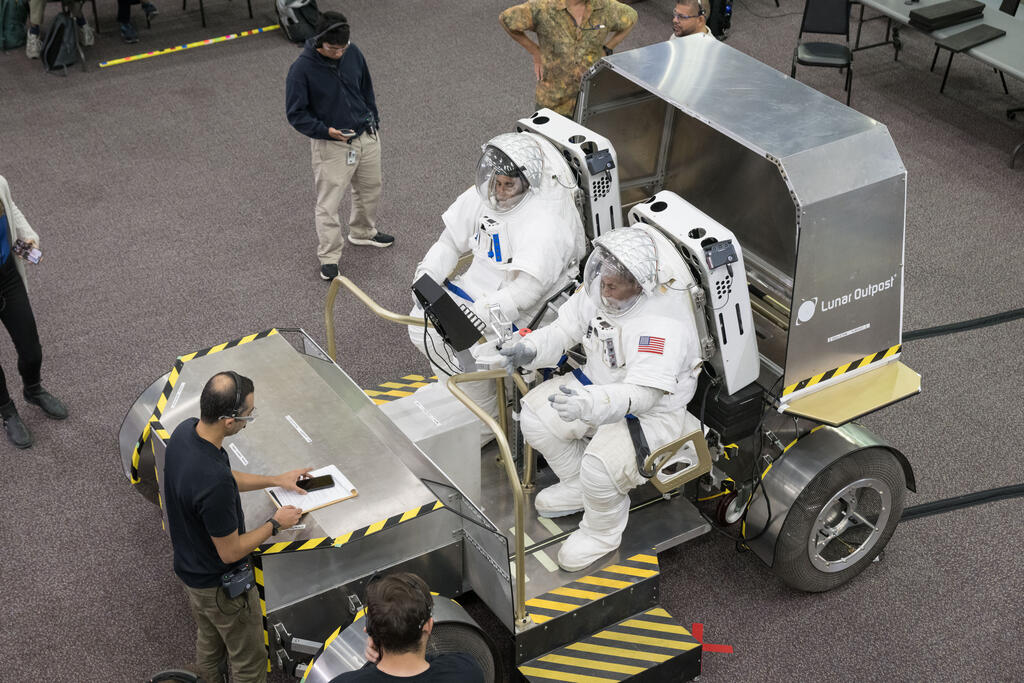
NASA/Bill Stafford
NASA astronauts sit inside a lunar terrain vehicle prototype during human-in-the-loop testing at NASA’s Johnson Space Center where they evaluated rover design, usability and comfort. The lunar terrain vehicles are undergoing testing for Moon Base development.
Justyna Sokol (JS): Thank you for having me.
LP: Let's start with your role at SwRI. You are leading multiple space science projects. So tell us about your current work. What are you working on now?
JS: I'm working on multiple projects, and I'm happy about that because Southwest Research Institute provides me an opportunity to apply my knowledge to many areas. Currently, one of the projects that I'm working on right now and about which I am very excited is called SHIELD. And it is NASA-funded science center, which gathers scientists from multiple institutes in the US and from overseas, which gather to study the interaction of the solar medium with the local interstellar medium, which we call it heliosphere. So we're studying the heliosphere and its shape, its structures and the processes within it.
LP: So you have a lot of projects going on in heliophysics, but you're also making the sun-moon connection, moving into lunar research. Tell us where we are in moon exploration. How ready are we? How are we preparing?
JS: As many of us know, going back to the moon is happening right now. Everybody is extremely excited about that. We are preparing to come back to the surface of the moon in many aspects. With the recent initiative by NASA, the community is focusing on moon base, on the presence of the humans on the surface of the moon, which is divided on different phases. These are short phases. But they require lots of preparation, from getting there, we need to get from Earth to the moon, then to be able to establish a base, or a place, where people can live when they are on the surface of the moon.
So the preparations are on multiple areas, from technology up to science, because right now, in this phase of the preparation of the return to the surface of the moon, these two research areas, they need to work together. The scientists, together with everybody who is focused on building the station, building the vehicles that will allow mobility on the lunar surface, and also those who will study the environment that we will be in, as well as provide the communication.
LP: Scientists are addressing mobility, communication. What are some other challenges scientists are working to solve ahead of a moon landing?
JS: When we are talking about going to the surface of the moon, we need to understand that we are going to live in a completely different environment. Currently, at Earth, we are protected by the magnetosphere, by the atmosphere. We can breathe freely. We don't need to wear funny suits to move around. We have lots of freedom.
When we go to the moon, then that environment is completely different. We don't have atmosphere. We are exposed to the space weather. We are exposed to the radiation. We are moving around in a very dusty environment all the time. All those differences make our presence there challenging. And we need to tackle those challenges in a multiple way.
The other thing is, imagine you are going there with a small rocket, and you can bring only limited resources with you. And you land there, and then what is next? You need to have a place that you will rest. You will sleep. You need to eat. You need to perform your daily activities. All of that needs to be provided there so that it can support human presence there.
LP: So people might say, we've already done this. We've been to the moon during NASA's Apollo 11 mission, July 20, 1969. What's the difference from then to now? It seems like there's a lot more going into this initiative to get us back to the moon.
JS: In Apollo phase, we did the stepping stones. We know, yes, we can do this. Right now, we are going to the next level. We are going on a larger scale, more instrumentation and more frequent landings. The exploration of the resources there or in the landing site will be performed in much wider area.
LP: So it is a bigger mission all around,more phases, more science.
JS: More people there, more activities, much broader activities, from studying the surface, from studying what's below the surface, studying the volcanism, studying the dust, studying the regulate, looking for the isotopes that are there. All of that is on a much larger scale right now.
LP: And we're talking about living and working on the moon.
JS: Yes, and that's the greatest difference.
LP: OK, so Justyna, you are contributing your expertise and research to moon exploration initiatives as a sun expert, or heliophysicist, with the Lunar Exploration Analysis Group. So what is the goal of the Lunar Exploration Analysis Group, also known as LEAG?
JS: LEAG is a community-based interdisciplinary forum that focuses on scientific and technical analysis of the community needs and plans for the lunar activities. LEAG gathers experts from science and from industry who work together for a common goal to going back to the moon. So in LEAG, as a heliophysics liaison for LEAG, I am supporting them on such areas as radiation or space weather, which are important because of the interdisciplinary nature of human presence on the surface of the moon. LEAG itself has multiple areas of expertise and provides findings to NASA that inform the future directions for the human activities on the moon.
LP: So I did poke around the LEAG website a little bit, and I love what they say about the value of exploring the moon to open the gateway to the solar system, pioneer development of new technologies, advance economic expansion, enable new scientific discoveries, and promote international partnerships. So it seems moon exploration is opening up all these doors. Why is it important for lunar researchers to be aware of your area of expertise, heliophysics research, and data? Could you describe that sun-moon connection for us?
Image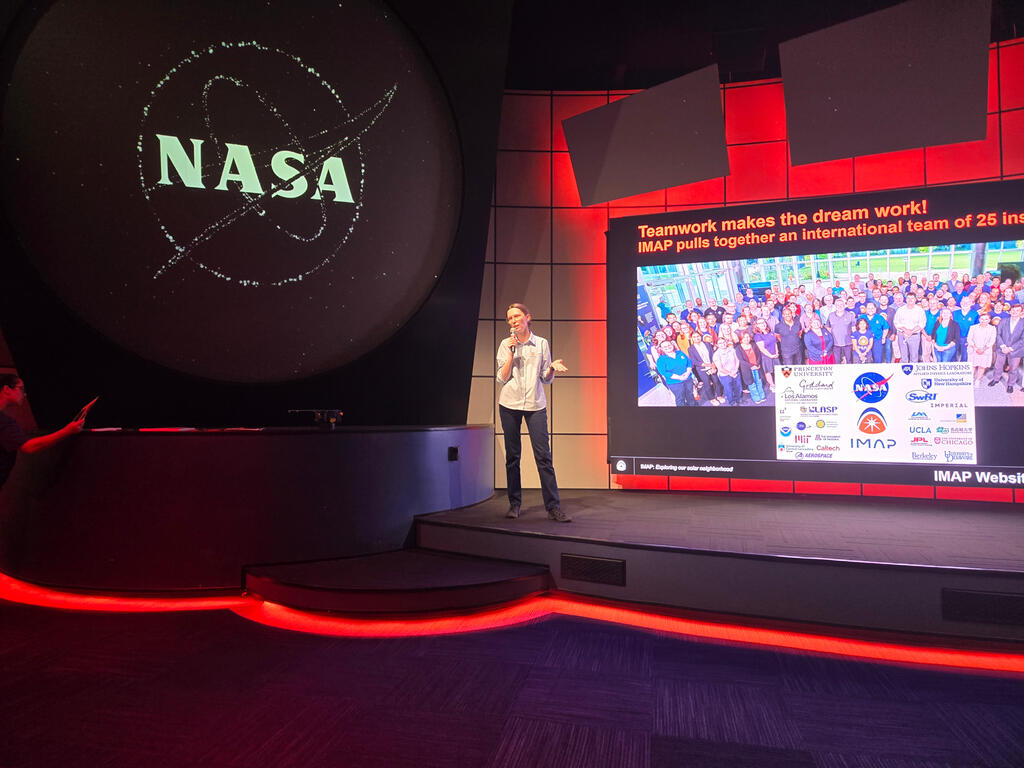
Justyna Sokol
SwRI heliophysicist Dr. Justyna Sokol gives a public outreach talk at the Kennedy Space Center. Dr. Sokol is a co-investigator for the Interstellar Mapping and Acceleration Probe (IMAP) mission, conversion surface lead for the IMAP-Lo instrument, project manager of the SHIELD DRIVE Science Center, collaborator for the New Horizons mission, team member of the Interstellar Probe Mission Concept Study, and she supports the Interstellar Boundary Explorer (IBEX) and Magnetospheric Multiscale (MMS) mission science teams.
JS: Of course. I'm happy to talk about that because, to me, moon is like an outpost there that gives me an access to the space. So it's very close to Earth, but it's also exposed to the solar wind and to the cosmic radiation that comes from outside the heliosphere. So this provides direct access to information about the composition of the local interstellar medium, the history of the solar system, the history of our space in the universe. This is very unique. And it's important that scientists are engaged in the lunar activities, because they can study all the processes that are not accessible for us, but from remote measurements from the surface of the Earth.
Another important aspect of being back on the surface of the moon is the difference of the environments. So when we live at Earth, we are thinking about the weather. I think everybody checks the weather forecast every morning. So we know it is important for us whether it will be a shiny day and a sunny day, or it will be a rainy day, because we need to prepare for that, or whether this will be a hot wave today or a cold wave tomorrow.
So when we go to the moon, we need to think differently. The weather there is different. We call it the space weather, which means that whether this will be a quiet day, the sun is quiet, not much activity is going there or whether this will be an active day, when we have coronal mass ejections, when we have solar energetic particles coming in our way. All of that can affect us. All of that can affect us by the radiation. And the radiation can be very harmful for humans for any life that is on the moon.
So currently, there is no life on the surface on the moon. And there is a reason for that. And now we want to change it. We want to bring humans from completely different safe environment, as we have on the Earth, to this very harsh environment. So imagine there is no atmosphere. We are exposed to the radiation all the time —the radiation from the sun, the radiation from the universe that comes to us. And we need to deal with this. And we need to make all the measures possible to protect all the life that we are bringing to the moon.
LP: What is the plan for that protection? Are we talking about moon suits all the time? Special buildings? Materials? Is that what your research is contributing to?
JS: That is one of the ways to protect the life. Special suits for sure when people will be walking from the station to the other station from the vehicle, to do the science exploration, excavation, all of that. You need to wear the protective suit all the time. But then you need to have a base or the shelter that you can live in, because you cannot stay in the suit forever. You need to take it out. You need to rest. You need to sleep. You won't do this in the suit.
That is one of these measures of having the base shelter, vehicles that are prepared for that that will give you enough mobility inside and won't limit your needs. And also, another measure is that the present on the surface of the moon will be limited in time. We cannot expose certain researchers or astronauts there for too long, radiation. So one of the measures will be just limiting the time spent or being exposed to the space weather.
LP: OK, so space weather, radiation can be dangerous to humans, but also, technology. So can you explain it to us a little bit more about how space weather and radiation can affect lunar exploration day to day? What are some examples of potential disruptions?
JS: That's a perfect question. And we have a very good analog to this. Whenever we have coronal mass ejection, the one happened a few years ago, and we were able to see the aurora in Texas. It's very nice example. Most of us are amazed by the colors on the sky, but this is the manifestation of all the radiation that was emitted from the sun, came to the magnetosphere, and how the magnetosphere shielded us from it, helped us to protect us from all the radiation.
But we know that that radiation can interrupt the communication. All of that also will happen on the surface of the moon with the one difference we won't have magnetosphere that will protect us. So when we think about the moon base, we need to take into account all the interruptions that can come from the extreme space weather events. And this includes the communication failure, power failure.
When we don't have the power, we cannot provide the air to breathe. We cannot provide the cooling system, cannot support the cooling system that will cool the interior of the shelter when we are exposed to the sun, or the heating when we are doing the lunar night. All of that needs to be supported, all the power system. The power system need to be protected as well.
When we think about having a base on the surface of the moon, we can think as an example of building a house in the middle of the desert. So to survive there, you need to provide power. You need to provide water. You need to provide cooling system or a heating system. You need to have supplies, like food. All of that is also needed on the surface of the moon, but you need to bring it to the space. And in the middle of the desert, you are still at Earth. You still can travel for a couple of hours and get to the civilization. On the surface of the moon, you are alone. You are exposed to the space. And you need to survive.
LP: You are locked in there once you're there. I imagine that in your role as heliophysics liaison to LEAG and your role is for two years. You are providing data information to lunar researchers. But what do you consider your most important contribution as LEAG heliophysics liaison?
JS: As LEAG heliophysics liaison, I want to focus on increasing the awareness of lunar exploration to the heliophysics community and bringing heliophysics research to the LEAG group and to the lunar community. We need to exchange the information. To make a progress, we need to exchange our knowledge.
LP: Why is it so important for you to contribute this knowledge to the lunar community? What do you want them to remember to know? You're kind of arming them.
JS: I feel like there is a lot that our communities can learn from each other. Heliophysicist can provide lots of supporting information for all the lunar exploration activities, starting from the space weather. This is one of the example. The other example is related with the magnetosphere. As the moon moves around the Earth, it crosses the magnetosphere. And especially at Southwest Research Institute, we have experts on the study of the magnetosphere, and they can contribute a lot about how the environment on the surface of the moon changes whenever we are crossing through the magnetotail.
LP: So you seem really excited, passionate about what you do, about heliophysics. But is there something that really stands out to you? What is most fascinating to you about heliophysics? Is there a fact or finding that most intrigues you?
JS: When thinking about the heliophysics, you are moving to a completely different scale because one of the things that fascinates me is that by the study of the heliosphere, I am studying the environment around the star. And that environment is very similar to all the other environments around other stars. But I'm studying it from inside. So the perspective is completely different. And I'm learning how it is to live close to the star.
During the night sky, I can look at multiple millions of stars, but I cannot access them. But through the heliophysics, I can understand what is the connection between the sun, the interstellar medium, the planets that are in the solar system. And this is fascinating for me that I have this opportunity from doing this from inside of the heliosphere, from inside of the stellar system. It's obvious, but at some point, thinking that somewhere there is a similar stellar system with similar environments, it's uplifting that probably the conditions somewhere there might be very similar to here.
LP: I get what you're saying. You look up at the night sky, you see millions of stars, but you only have a line, a connection to one. And that's our sun. And you're able to experience that star, live underneath its power, and study it in a way that you can study no other star. So that's really cool. That's a great perspective, given what you do. OK, so what was your path to space science? And what advice do you have for young people interested in the field?
Image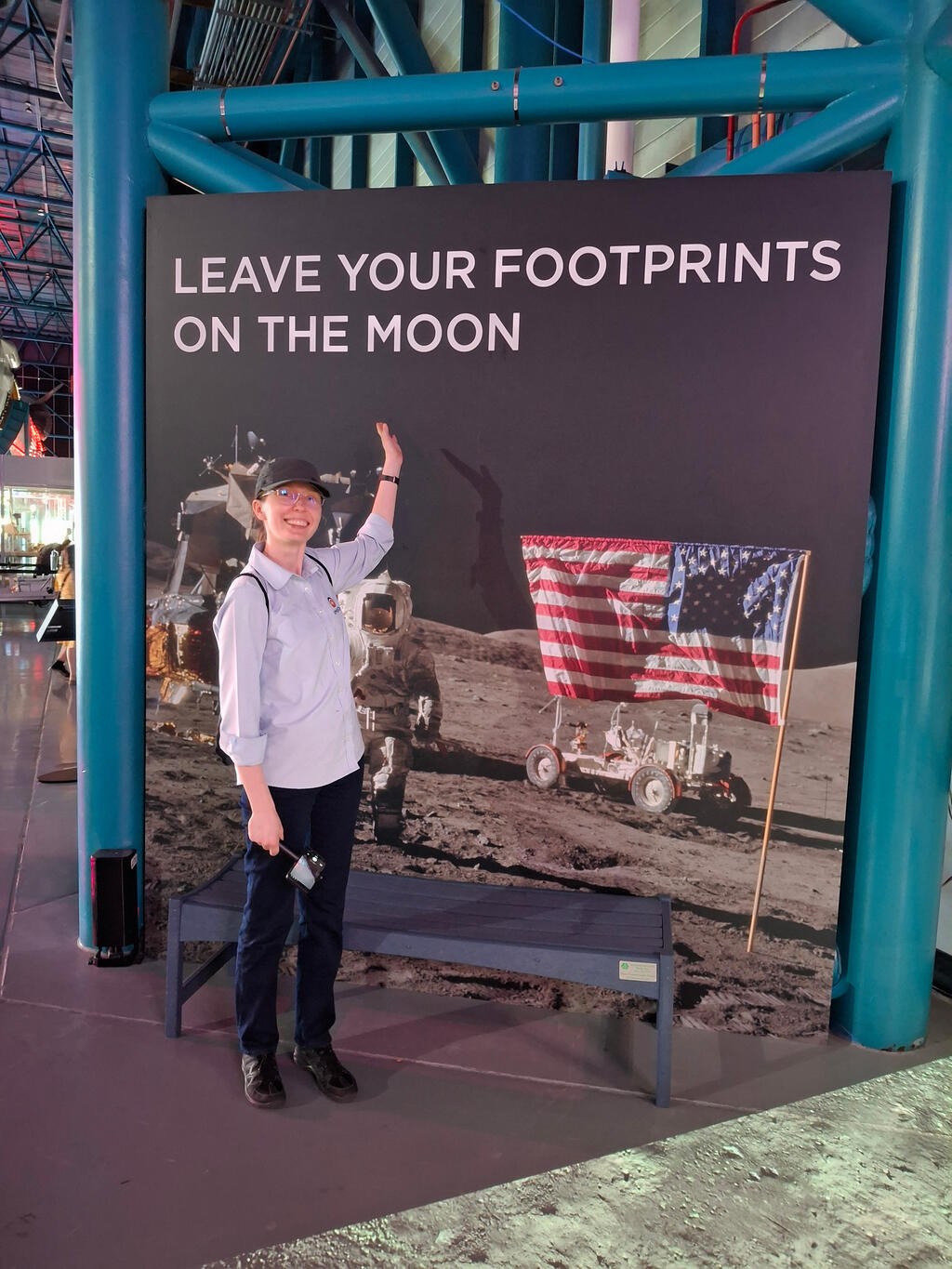
Justyna Sokol
Dr. Sokol is serving a two-year term as heliophysics community liaison for the Lunar Exploration Analysis Group. In this role, she provides data and information on how the Sun’s activity and space weather could impact humans living and working on a Moon base.
JS: That's a very good question because it goes back to my very early memory I had of seeing a man in a huge suit. [LAUGHS] And I was a few years old, very small. This is one of my very first memories. And I remember asking my parents, who is that man, why he is in this huge white suit. And my parents replied to me, oh, because he's an astronaut. And who's an astronaut? As a kid asking parents those questions coming up who's an astronaut? Oh, he studied astronomy. What's astronomy? [LAUGHS] Oh, astronomy is just a branch of physics.
And somehow, I was interested in physics. I started to learn physics very early. I am a physicist by profession. And I started to learn, oh, this is a branch of science that tells me how the world works, what is the connection of different processes, why we hear each other, why we can see things. All of that, the basis comes from physics. So I started to learn physics. I study physics. I graduated in experimental physics, which helps me a lot during my professional work at Southwest Research Institute.
And at some of the way, I was fascinated by the sun. I remember going to the astronomical observatory at the university I attended, and then I look at the surface of the sun and through the solar telescope. And I saw the active regions, the prominences. That was fascinating. That was amazing. And I wanted to study it more. I attended internships, the summer internships, when I could operate one of the huge coronagraphs that we had in Poland.
And it was amazing. I could operate it. I could do the solar observations during the day. And that gave me lots of interest in the study of the sun. Later on, I started to move to the heliosphere through the solar wind interaction with the interstellar medium. But all my interest was around the heliosphere.
LP: So it all started with a man in the suit, an astronaut. Do you want to go to space? Would you want to go to the moon?
JS: Oh. [LAUGHS] Yes, that was my dream. That was my dream to follow that path, to be the one who will wear this big suit someday. But [LAUGHS] my parents very quickly show me different directions I can go. And I chose physics and being a scientist. And I'm very happy about that.
Right now, at Southwest Research Institute, I'm building a space instrumentation. I'm building the space instruments. In one of my projects here at Southwest Research Institute, I made a critical subsystem for one of the instruments of the Interstellar Mapping and Acceleration Probe, IMAP. Those instruments are right now in space. I built one of the critical subsystem, it is called conversion surfaces, that enable detection of energetic neutral particles from the local interstellar medium that surrounds the heliosphere. And those conversion surfaces right now are in the space between the Earth and sun, and they are providing scientific data. And there is a huge group analyzing those data.
And it makes me so proud that I built a hardware, and I can analyze the data that this hardware provides. So I think being an astronaut on the surface of the moon would be great, but the path that I chose is even more exciting.
LP: And there's a part of you in space now. Your work, your hardware is there representing you.
JS: Yes, and the hardware will be longer than I.
LP: And maybe one day, you'll hop on one of those commercial flights they keep telling us they're coming to the moon, and maybe that'll be you up there in the big suit, or maybe with NASA. You never know, right?
JS: Never know.
LP: All right. And so what advice do you have for young people interested in the field? It sounds like you were always curious, and you asked those big questions. So what's your advice for kids who say, I want to be like her?
JS: Never give up. That would be one of the advices that we say. Find something that you are good at, and be determined. Just follow your dreams. It might not be easy. It might take long time. But if you really find something that you feel you are good at, that this is your strength, and you know that you want to do something for space, there will be a way for you to do this.
And when we build an instrument that we launch to the outer space, we hear mostly the name of the instrument, like interstellar mapping and acceleration probe IMAP mission. But when we think about the number of people who contributed to that mission, that mission was possible because of thousands of people, thousands of expertise, thousands of skills that people had, and they made that mission possible.
And being one of those who made that contribution, it really means a lot. And this is very rewarding. And I would encourage everybody who really wants to contribute to space, just follow your dreams, and be very determined because it is possible. Just keep going.
LP: That's great. Thousands of people are contributing. And if this is your dream, there is a place for you, is what I'm hearing.
JS: Yes, exactly.
LP: OK, that's great. OK, and you're a heliophysicist. Why is contributing to moon exploration important to you?
Image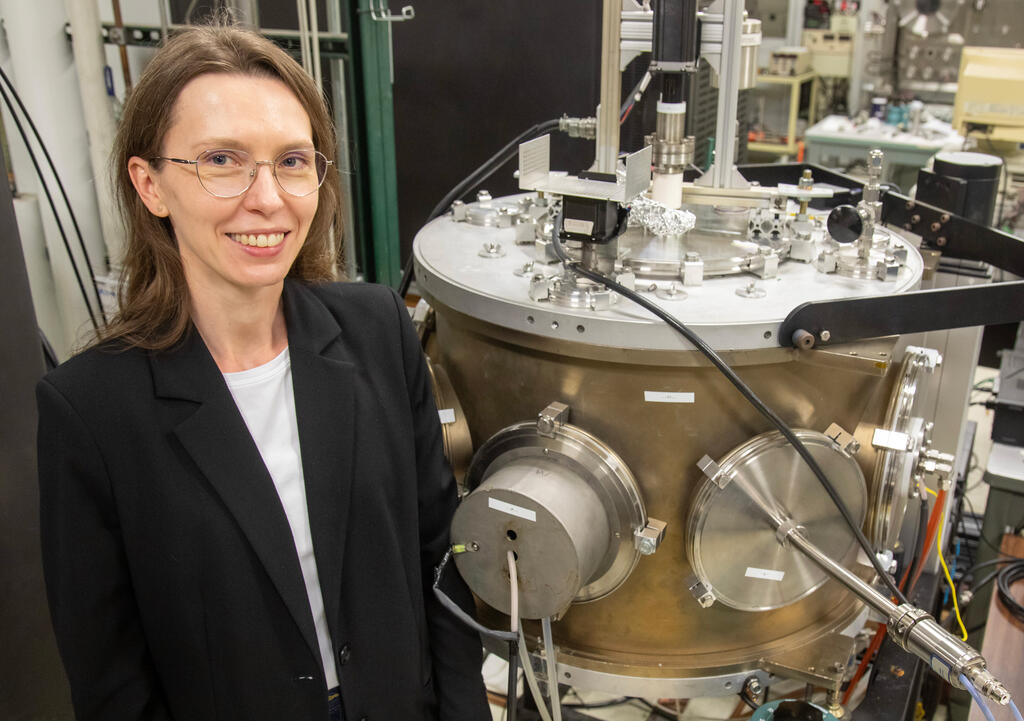
Dr. Sokol is pictured in the SwRI coating chamber with the closed-field unbalanced magnetron sputtering system for spacecraft instrument development.
JS: Because I can learn more about the universe, about the history of our solar system, about the heliosphere. So when I think about my interest in the surface of the moon, it also came from my background, from the study of the solar interaction with the local interstellar medium. And there is one topic that brings lots of questions in the community. It is the ratio of deuterium to hydrogen.
There are different results from the available measurements, from cometary measurements, from measurements of the interstellar neutrals that I was involved in, and the measurements from the lunar samples. And they don't agree. And the question is, why? Because they should. And this is a topic that brings my attention to the lunar exploration. Can we study the deuterium to hydrogen ratio on the surface of the moon and find a piece of information that will help us to solve the issue of different values of the deuterium to hydrogen ratio?
LP: Wow. So through lunar exploration, you're going to learn more about the sun.
JS: I'm going to learn more about the interstellar medium. So I'm going to learn more about the interstellar neighborhood of the sun. So I'm going after the composition of the local interstellar medium.
LP: All right. So I've really loved your perspective. And thank you for connecting the sun and the moon for us and helping us understand what's coming at the moon, especially if humans are about to land there again, live there, and work there.
I also really loved your advice for young people hoping to get into a similar field — find your strength, and never give up. So we can close with that because I don't think there's anything better. But thank you for being here today, Justyna, and for telling us about your role in these upcoming lunar initiatives. It was really fascinating learning about your area of expertise and your contributions to these upcoming moon missions.
JS: Thank you. It was a pleasure to tell you about my work and the motivation for my daily research.
And thank you to our listeners for learning along with us today. You can hear all of our Technology Today episodes, and see photos, and complete transcripts at podcast.swri.org. Remember to share our podcast and subscribe on your favorite podcast platform.
Want to see what else we're up to? Connect with Southwest Research Institute on Facebook, Instagram, X, LinkedIn, and YouTube. Check out the Technology Today Magazine at technologytoday.swri.org. And now is a great time to become an SwRI problem solver. Visit our career page at SwRI.jobs.
Ian McKinney and Bryan Ortiz are the podcast audio engineers and editors. I am producer and host, Lisa Peña.
Thanks for listening.
[MUSIC PLAYING]
SwRI studies the dynamic connections that link the Sun, solar wind, and the magnetized plasma environments of the planets and moons of our solar system. We develop the technology and knowledge to detect and predict space weather — extreme conditions in space that affect people and technology.
How to Listen
Listen on Apple Podcasts, or via the SoundCloud media player above.